
Influencing public policy has become increasingly complex. Organizations are expected to engage supporters across multiple communication channels, respond quickly to legislative developments, and demonstrate measurable campaign results—all while maintaining authentic relationships with their communities.
Traditional advocacy methods still have value, but they often require significant time, manual coordination, and administrative effort. As advocacy programs continue to grow, organizations need smarter ways to organize campaigns without sacrificing the human element that makes grassroots engagement effective.
This is where CiviClick AI represents the next step in modern grassroots advocacy. Rather than replacing human participation, intelligent advocacy technology helps organizations work more efficiently, allowing teams to focus on strategy, communication, and genuine constituent engagement.
Grassroots Advocacy Is Evolving
Public affairs professionals today face a very different environment than they did a decade ago.
Supporters expect fast communication, mobile-friendly experiences, personalized messaging, and real-time campaign updates. Legislators receive thousands of constituent communications every week, making authenticity more valuable than ever before.
Organizations can no longer depend solely on mass email campaigns or generic advocacy alerts. Successful campaigns require careful planning, meaningful engagement, and the ability to activate the right supporters at the right moment.
Modern advocacy has become both a communication challenge and a data management challenge.
The Shift From Manual Work to Smart Campaign Management
Many advocacy teams still spend countless hours performing repetitive administrative tasks.
Campaign lists need updating.
Supporter databases require maintenance.
Reports must be prepared.
Engagement statistics have to be reviewed.
Communication schedules need constant adjustments.
These responsibilities consume valuable time that could otherwise be spent developing stronger advocacy strategies or building relationships with supporters.
Technology allows organizations to reduce repetitive work while improving overall campaign efficiency.
Why Data Has Become a Strategic Advantage
Every advocacy campaign generates valuable information.
Organizations can learn which communication channels produce the highest participation, which legislative issues generate the strongest engagement, and which supporter groups respond most consistently.
Instead of relying on assumptions, advocacy professionals increasingly use campaign analytics to make informed decisions.
Understanding participation trends helps organizations allocate resources more effectively and improve future legislative outreach.
Data has become one of the most valuable assets in public affairs.
Personal Engagement Still Wins
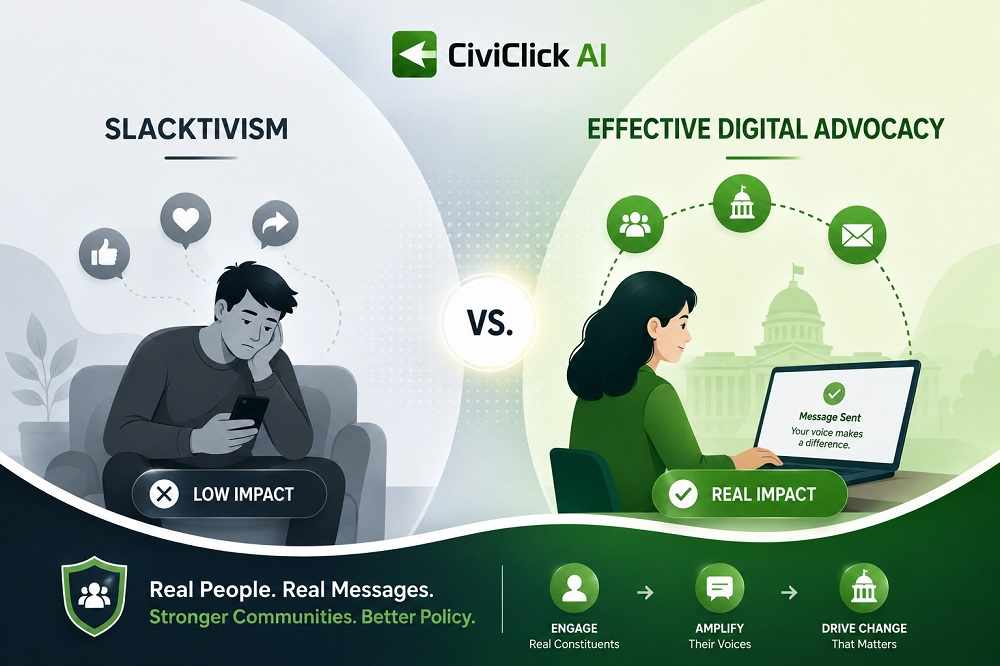
Technology can organize campaigns, but it cannot replace authentic human voices.
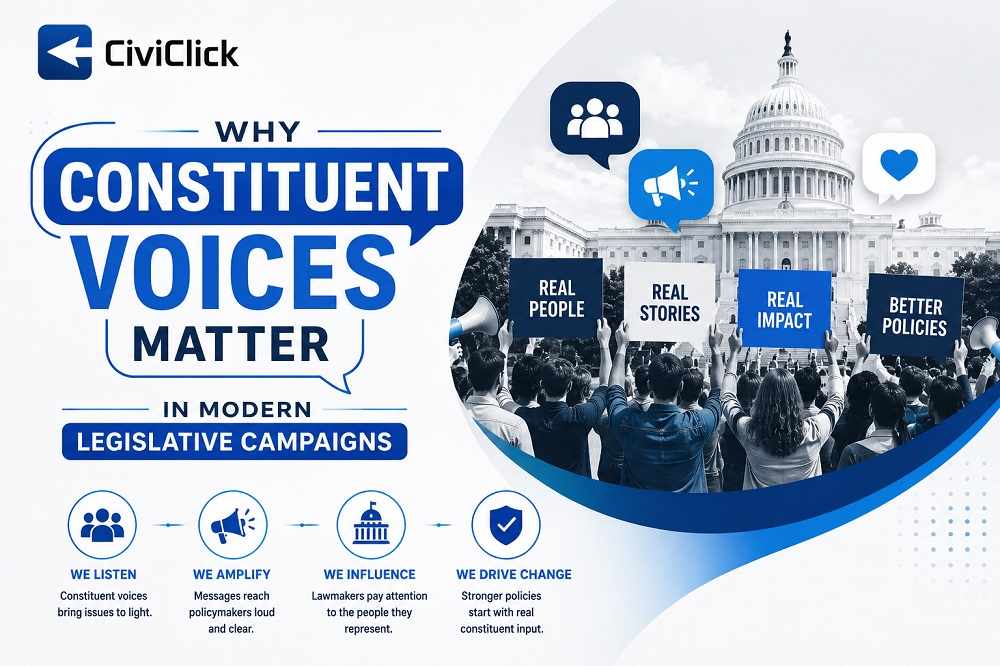
Legislators continue to value communication from real constituents explaining how proposed legislation affects their businesses, communities, families, or professional lives.
Personal experiences provide context that automated messages cannot replicate.
The most successful advocacy organizations combine modern technology with genuine public participation, ensuring every campaign reflects authentic community concerns.
Building More Efficient Advocacy Programs
Organizations seeking long-term advocacy success generally focus on several priorities:
Building trusted relationships with supporters
Creating clear legislative objectives
Delivering timely action alerts
Encouraging personalized communication
Measuring campaign performance
Continuously improving engagement strategies
This balanced approach produces advocacy campaigns that are both efficient and credible.
Technology Supports Better Decision-Making
Advocacy software has become much more than a communication platform.
Modern systems help organizations organize supporter information, monitor campaign activity, measure participation, coordinate legislative outreach, and simplify reporting.
Solutions like CiviClick AI support advocacy professionals by reducing administrative complexity while helping teams stay focused on strategic public engagement. Instead of spending hours managing spreadsheets or compiling reports, organizations can dedicate more time to building meaningful relationships with constituents and policymakers.
This combination of efficiency and human-centered advocacy creates stronger, more sustainable campaigns.
Trust Remains the Foundation of Advocacy
No technology can replace credibility.
Organizations earn influence by maintaining transparency, providing accurate information, respecting supporters, and encouraging genuine civic participation.
Long-term trust produces stronger engagement than short-term promotional efforts.
Supporters who believe in an organization's mission become advocates themselves, expanding campaign reach through authentic community involvement.
Looking Ahead
Grassroots advocacy will continue to evolve as communication technology advances, but its purpose will remain unchanged.
Successful organizations will be those that combine intelligent digital tools with authentic public participation, allowing people—not automation—to remain at the center of every advocacy effort.
As public affairs continues to become more data-driven and digitally connected, platforms such as CiviClick AI are helping organizations modernize campaign management while preserving the authentic constituent engagement that makes grassroots advocacy effective.



Write a comment ...